Find the gaps your scanner can't see.
Security leaders choose Kusari to prioritize software supply chain risk, verified at source.
Built by the team behind GUAC and SLSA
Commercial and Open Source Partners





Security leaders choose Kusari to prioritize software supply chain risk, verified at source.
Our founders spent fifty combined years defending software inside Citi, MUFG, and Bridgewater, before creating GUAC and SLSA.
Two decades defending software inside regulated finance, where every control gets audited.
GUAC with Google and Purdue. SLSA and in-toto with the community. Now referenced in NIST, ISO, and FDA guidance.
A dependency graph built from source, not runtime — so you know exactly where you're exposed.
Kusari maps every direct and transitive dependency to the systems running them, ranks what's actually exploitable, and closes the loop with autonomous remediation.
They read what you shipped, not how it was built. Anything several layers deep never shows up.
CVSS ranks severity. It can't tell you what's reachable, exploitable, or in the blast radius.
When the next Shai-Hulud hits: which services are exposed, and what's the fix. Seconds, not days.
Most scanners rank exploitability on a build they assume is clean. Kusari verifies that assumption first.
Most exposure sits below the dependency your team actually chose. Kusari traces it down through every layer, verified at source.
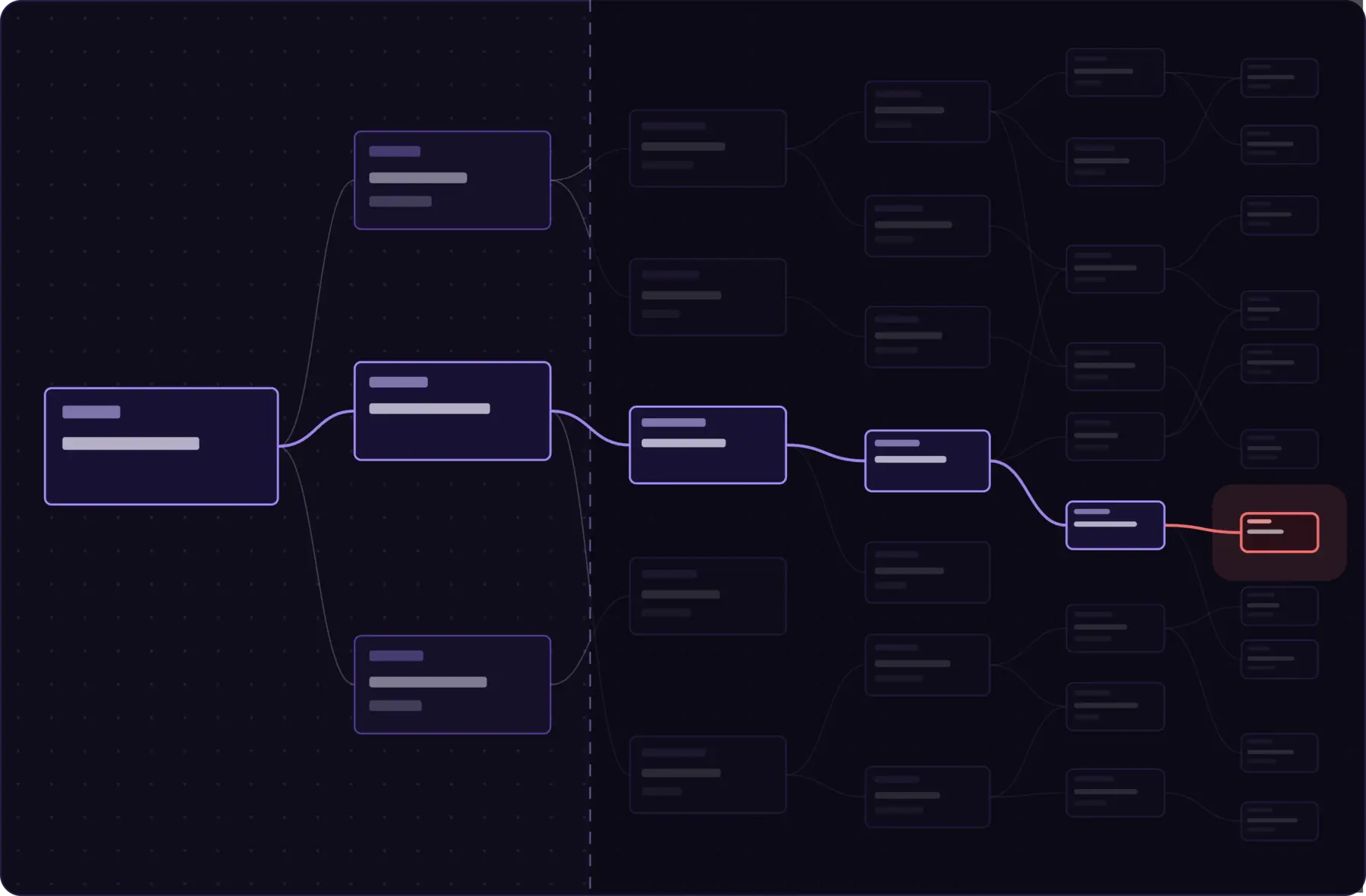
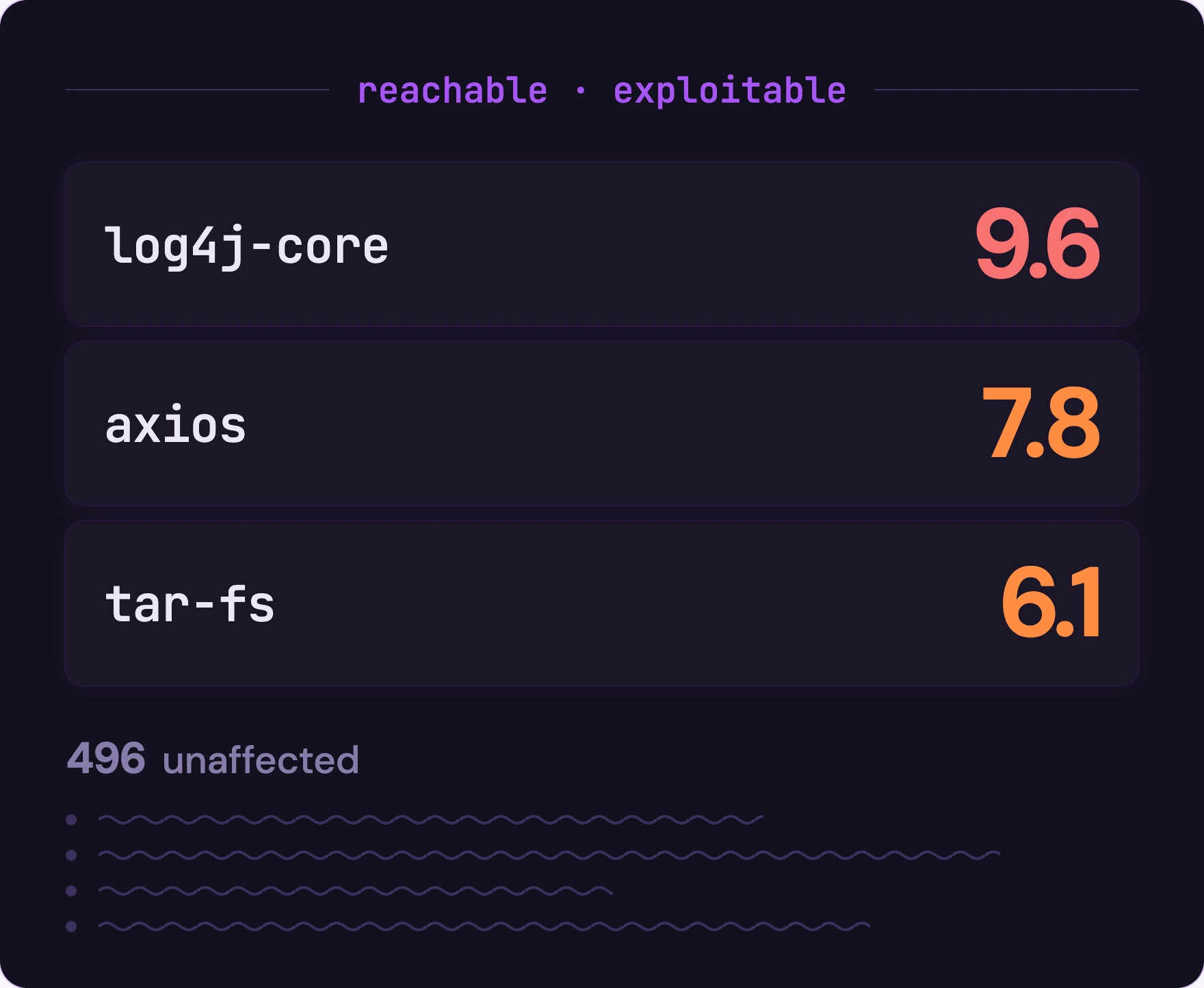
Reachability and exploitability analysis put only genuinely exploitable findings in your team's queue.
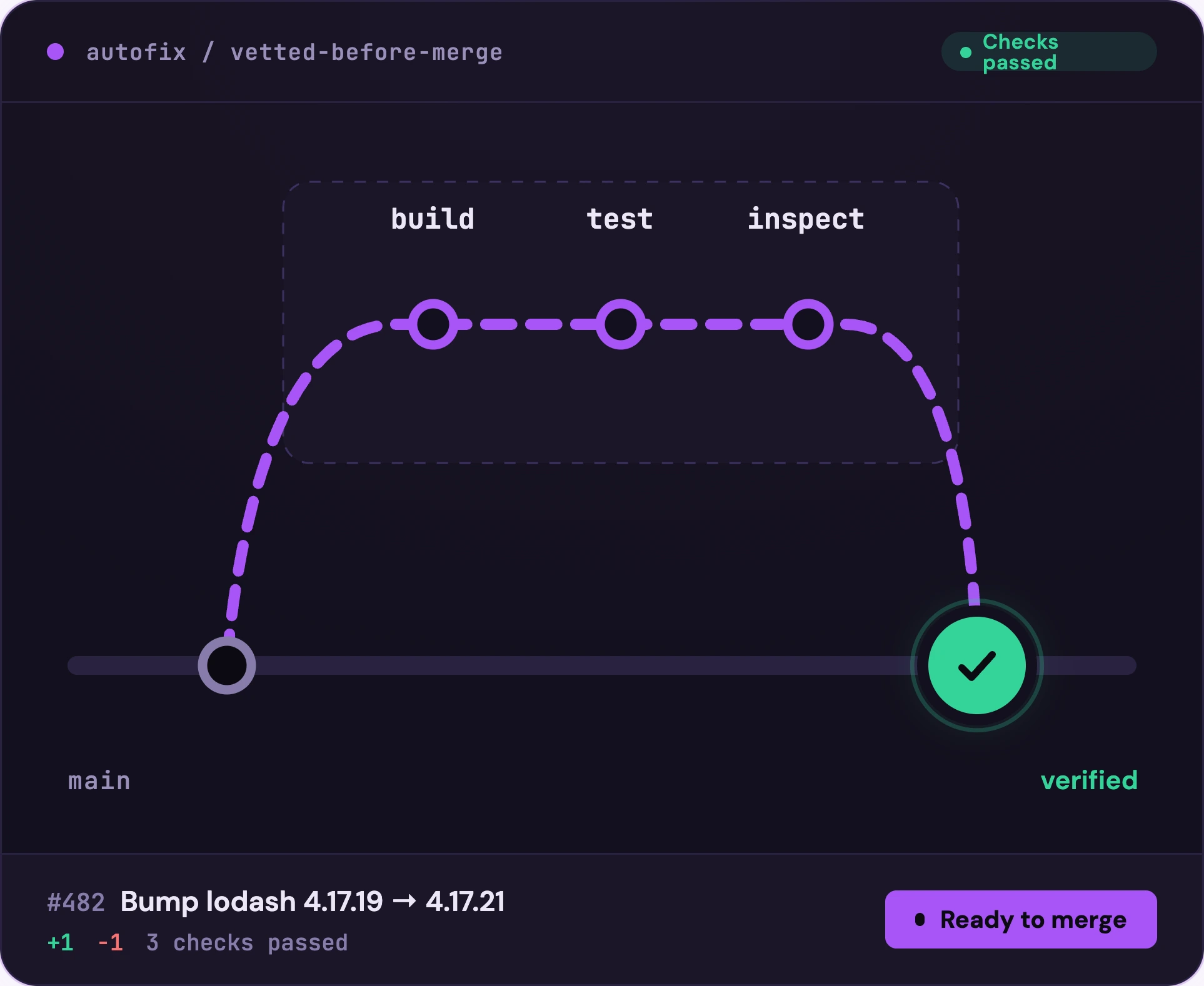
AutoFix generates and validates environment-aware fix PRs, so the fix is vetted before it reaches your repo.
Software supply chain security is the practice of knowing, verifying and defending every component in the software you ship: the open source packages, transitive dependencies, build tools and pipelines it is assembled from, alongside the code your team writes. Modern applications are assembled more than written. J.P. Morgan research found 95% of open source vulnerabilities live in transitive dependencies that no developer selected directly, and the average JavaScript project carries 683 transitive dependencies against 10 direct ones.
Scanners inspect the finished artifact and read its manifest, which is a declaration of what the software is supposed to contain. They typically resolve about two layers of a dependency tree that commonly runs nine layers deep, and take the manifest's word for the remaining seven. Anything the scanner could not resolve is absent from the report rather than flagged as unknown, so a gap and a clean result look identical. Scanners also cannot tell you whether an artifact matches the source that produced it.
Verified at source means the dependency graph is built from your source code and build systems as software is created, rather than reconstructed from finished binaries afterwards. The difference is between recording what actually happened during a build and inferring it later from the output. Source-built evidence captures transitive dependencies, build provenance and the identity of who produced each artifact, in formats a third party can independently check.
Kusari resolves the dependency tree from source, and states where its data is complete or incomplete rather than leaving gaps indistinguishable from clean results.
Kusari is a software supply chain security platform. It builds a continuously updated knowledge graph of the components across your repos, images and pipelines, verified at source rather than inferred from finished binaries. It answers four questions: do we have this vulnerability, where is it running, how bad is it once reachability, exploitability and blast radius are accounted for, and how do we fix it. Reachability identifies what is live in your code paths, exploitability ranks what attackers are actually using, and remediation arrives as a fix already built and tested.
No. Kusari ingests output from the scanners and SBOM tools you already run, including Snyk, Black Duck, Prisma Cloud, Dependabot, and GitHub Advanced Security, and normalizes it into a single graph alongside evidence built from your own source. Teams run both. Scanners tell you a vulnerability exists; Kusari tells you where it actually is in your estate, whether anything can reach it, and what fixing it costs.
Kusari was founded by Tim Miller, Parth Patel, and Michael Lieberman, who work on the open standards this category is built on. They co-created GUAC with Google, co-created SLSA, and maintain in-toto attestations, which originated at New York University. GUAC is a graph for software supply chain metadata. SLSA is a framework for build provenance. in-toto is a specification for verifiable claims about how software was produced. Kusari's architecture is built on these standards rather than on a proprietary format layered over them.
Reachability analysis determines whether a vulnerable function in a dependency can actually be called from your application's code paths. A vulnerability in a package you import but never execute is present without being exposed. At one Kusari customer, a national health insurer, reachability and exploitability analysis removed 90% of findings before anyone triaged them, leaving the queue reflecting what was genuinely exploitable.
Kusari produces SBOMs and attestations in SPDX, CycloneDX and in-toto formats, which a third party can independently verify. In July 2026 CISA, the NSA, the FBI and international partner agencies replaced the SBOM minimum elements, taking required data fields from 7 under the 2021 NTIA baseline to 17, including a requirement to state explicitly when information is unknown or withheld. The same underlying evidence supports EU Cyber Resilience Act, DORA, PCI DSS 4.0 and NYDFS Part 500 software inventory obligations.
Supply chain attacks are landing weekly. Speak with the team that wrote the standards and find out your real exposure.